
Hands-On Operational Support Where It Matters Most
Bringing Clarity to Manufacturing Operations
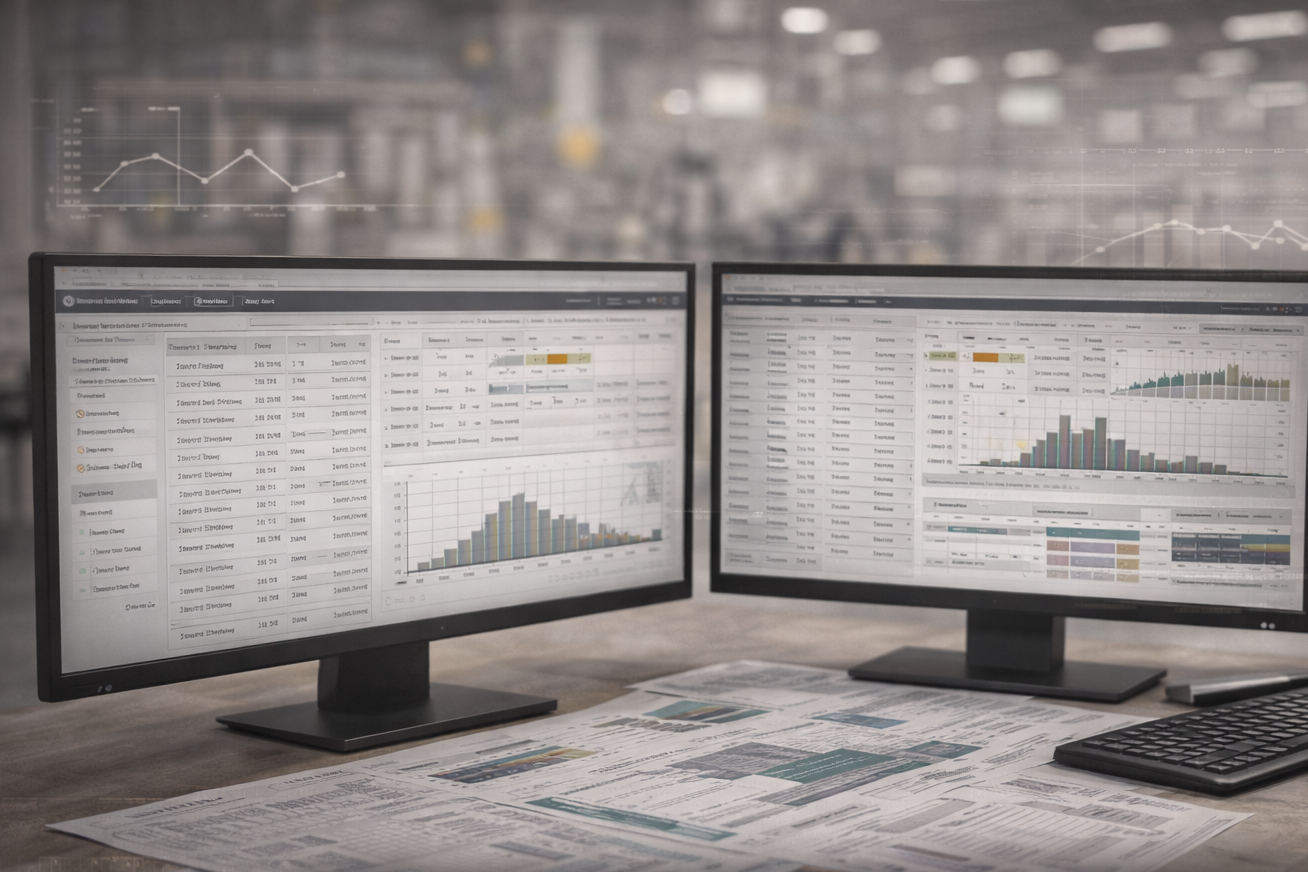
Pack Consulting was created to support manufacturers who already have systems in place, but lack clear visibility and alignment across them. I work within your existing workflows to organize data, connect departments, and strengthen operational stability.
The result is clearer production visibility, more confident planning, higher productivity, and improved profitability — without disrupting how your teams work.
Our Services

10-20 hours per month
Operational Visibility & Backlog Control multiple services to choose from.

20-40 hours per month
End-to-end operational oversight, coordination, and optimization
Our Process
-
![]()
01
Understand Your Operation
Free consultation and workflow review
-
![]()
02
Stabilize the Backlog & Data
Fix inaccuracies, close gaps, stop lost work
-
![]()
03
Create Clear Visibility
Dashboards, job tracking, readiness checks
-
![]()
04
Support Confident Planning
Production look-ahead and risk awareness
-
![]()
05
Improve Results
Better delivery, productivity, and profitability






Customer Reviews
“Pack Consulting helped us identify gaps in our data and workflows that were quietly costing us money. By correcting those issues and improving visibility, we saw measurable cost savings without adding headcount or changing systems.”
— Director of Operations“Within the first few weeks, we had a clearer understanding of our backlog than we’d had in years. Issues that were previously discovered too late were visible early, which reduced expediting and overtime almost immediately.”
— Operations Manager, Manufacturing“The biggest difference was confidence. Once leadership trusted the data, we were able to make better decisions faster. That alone improved throughput and helped protect profitability.”
— VP of OperationsLet’s Work Together
I’ve spent my career working inside manufacturing operations, where I’ve seen firsthand how much effort teams put in every day to keep things moving. What I noticed over time wasn’t a lack of skill or commitment — it was a disconnect between systems, data, and departments.
In many of the manufacturing environments I’ve worked in, scheduling, production, shipping, and automation were all operating from slightly different versions of the same information. Jobs didn’t stall because people weren’t doing their work — they stalled because there wasn’t clear, end-to-end visibility tying everything together.
I found that when I took the time to organize operational data, validate what the systems were actually showing, and connect departments around a shared view of the work, everything ran smoother. Scheduling became more accurate, production interruptions decreased, shipping became more predictable, and communication across the company improved. That clarity made a real difference — not just in performance, but in how confident teams felt doing their jobs.
I’m interested in understanding where your operation feels unstable or reactive. I want to know where jobs get stuck, how confident you are in their backlog and schedules, and how departments communicate when things change.
These conversations aren’t about replacing systems or forcing new processes. They’re about working within what already exists and finding practical ways to improve visibility, alignment, and follow-through.